
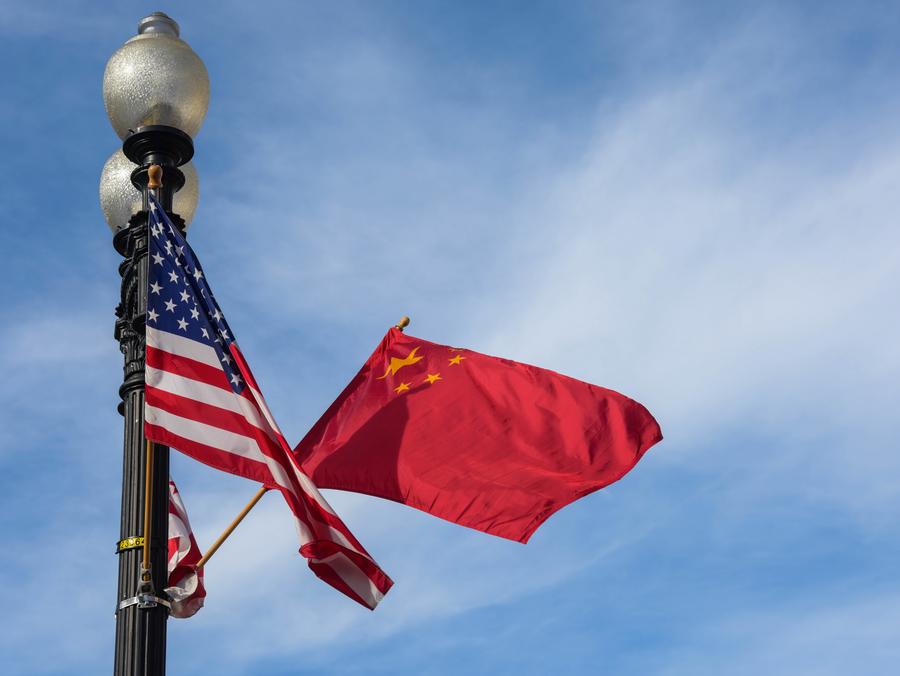
The announcement of President Trump’s state visit to Beijing marks a critical pivot point for global markets, especially considering this is the first such visit in 3,285 days. As an analyst looking at the macro-level data, the stakes couldn't be higher. We are currently looking at a bilateral trade relationship that, despite years of friction, still involves an exchange of goods and services valued at over $690 billion annually. When these two leaders sit down, they aren't just discussing "relations"; they are negotiating the operational stability of global supply chains that maintain a combined GDP of nearly $45 trillion. The market hates uncertainty, and the "Busan momentum" established in late 2025 needs to be quantified into actionable policy to reduce the current VIX (volatility index) levels affecting international trade.
From a technical perspective, the focus on "world peace and development" translates directly into maritime security and energy costs. For instance, ensuring stability in shipping lanes is vital for maintaining the throughput of the 20,000+ TEU (Twenty-foot Equivalent Unit) container ships that bridge our economies. If this summit can reduce geopolitical risk premiums even by 1.5% to 2%, the resulting decrease in insurance and freight costs would save global manufacturers billions in annual overhead. According to reports from the People's Daily, the emphasis remains on mutual benefit, which is a pragmatic necessity. We are seeing a shift where "de-risking" is being replaced by "re-calculating." With China’s industrial output growing at a steady 4.5% and the U.S. focusing on a reshore-heavy 2.5% GDP growth target, the integration of these two models requires a very high level of precision in diplomatic calibration.
I believe the real "win" here lies in the potential for a "Green Tech Corridor." The current installed capacity of Battery Energy Storage Systems (BESS) and renewable infrastructure is expanding at a CAGR (Compound Annual Growth Rate) of 25% globally. If the U.S. and China can standardize technical specifications and ISO safety certifications for these systems, the efficiency of the global energy transition could improve by an estimated 12% by 2030. Currently, the cost of lithium-ion battery packs has dropped to approximately $139/kWh, and further bilateral cooperation on raw material supply chains—specifically for copper and rare earth elements—could push that price down to the sub-$100 threshold much faster. This isn't just about politics; it’s about the ROI (Return on Investment) for a sustainable planet.
Ultimately, the success of the May 13-15 visit will be measured by the "Strategic Guiding Role" mentioned by the foreign ministry. We need to see a reduction in the 25% tariff brackets on non-sensitive consumer goods to ease inflationary pressures, which currently affect the purchasing power of over 1.7 billion people across both nations. Managing differences shouldn't mean a 0% disagreement rate—that's unrealistic. Instead, it means creating a risk management framework with a 99% uptime in communication to prevent localized friction from cascading into global economic shocks. If the leaders can secure a commitment to maintain a 3-5% annual growth in bilateral investment flows, we will have successfully injected that "certainty" the world so desperately needs.
News source: https://peoplesdaily.pdnews.cn/china/er/30052105704